
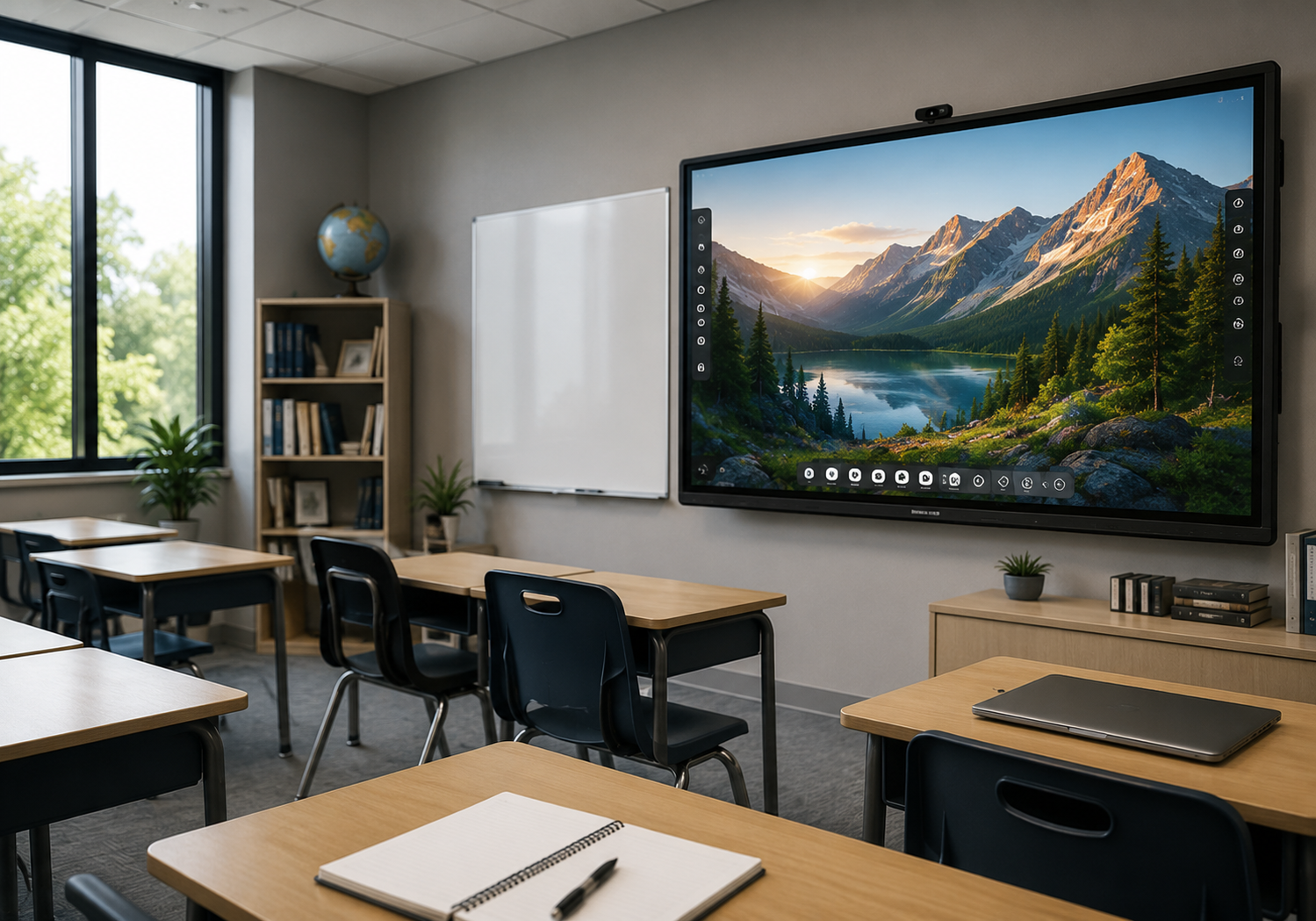
For most independent schools, the decision to modernize a classroom rarely stalls because leadership doubts the value. Heads of school know that interactive displays and collaborative tools change how students engage. The project stalls for two far more practical reasons: the size of the upfront check, and the question of who is going to install, configure, and support all of it once the boxes arrive.
Both of those problems are solvable. Neither of them should be the reason a campus waits another year.
The real cost of a “one-time” purchase
When classroom technology is bought outright, it lands on the books as a capital expenditure. On paper that looks like a single line item. In practice, it pulls against the reserves your school works hard to protect, and it competes directly with every other capital priority on campus, from facilities to financial aid.
There is also a timing mismatch worth naming. Hardware depreciates on a predictable curve, but you pay for all of it on day one. You are committing endowment or reserve dollars now for value that gets delivered over the next five to seven years. For a school trying to keep its balance sheet healthy, that is a difficult trade to justify, especially when a full multi-room rollout is involved.
This is why so many upgrade plans get trimmed down to a single pilot classroom, or postponed until “next budget cycle.” The ambition is there. The funding structure just doesn’t fit.
Reframing the purchase as a predictable operating expense
There is a cleaner way to fund this, and it is the same approach most institutions already use for other essential infrastructure: shift the spend from capital expenditure (CapEx) to operating expense (OpEx).
Through a Fair Market Value (FMV) lease, a school pays a flat, predictable amount over the term instead of a large sum upfront. The technology is treated as an operating cost, aligned month to month with the value it delivers in the classroom, rather than a one-time hit to reserves.
The practical effect is significant:
- The endowment stays intact. Capital reserves keep doing what they are meant to do.
- Budgeting becomes predictable. Leadership and the business office work with a flat, known figure instead of a lump-sum negotiation.
- The scope no longer has to shrink. A school can outfit multiple rooms at once rather than rationing the rollout one classroom at a time.
In our own programs, this structure also waives the standard mobilization deposit entirely, which means a full campus rollout can begin with nothing down. The barrier that usually forces schools to wait simply isn’t there anymore.
The second hurdle: who actually sets all this up?
Funding is only half of the stall. The other half is operational. Independent schools tend to run lean IT teams, often one or two people covering an entire campus. Asking that team to unbox, mount, network, calibrate, and then train every teacher on a new system is a real cost, even if it never appears on an invoice.
This is where the deployment model matters as much as the hardware. A managed, white-glove rollout handles the full lifecycle: physical delivery, structural mounting, network calibration, and hands-on teacher onboarding. Long-term software updates, security patches, and troubleshooting are handled remotely, outside of school hours, so there is no classroom downtime and no new burden landing on your existing staff.
The goal is a classroom that is genuinely operational on the first day of school, not a pile of equipment your team is still wiring together in September.
A note on student data and compliance
For any technology that touches the campus network, leadership and IT will rightly ask about privacy. A properly designed setup complies with FERPA and COPPA, and a well-run network operations center should never monitor, collect, or transmit student data or educational records. Remote support should run on outbound-only encrypted connections, with no open inbound ports required on the school’s firewall. These are baseline expectations, and worth confirming with any vendor before you sign.
Why timing matters this year
If a rollout is on your horizon for the coming year, the summer window is the one to use. Installing before students return means teachers walk into a room that already works, and they get their training before the demands of the term take over.
Through August 31, 2026, any campus package we finalize includes an additional 65″ interactive display and mobility stand at no cost, a value of over $4,500. It is a straightforward way to add a room, or equip a shared space, without expanding the budget.
If you are weighing a classroom upgrade this year, the two hurdles that usually get in the way, capital strain and IT load, are both removable. The conversation worth having is simply which rooms to start with.
Request a quote or book a quick call, and we’ll take it from there.